
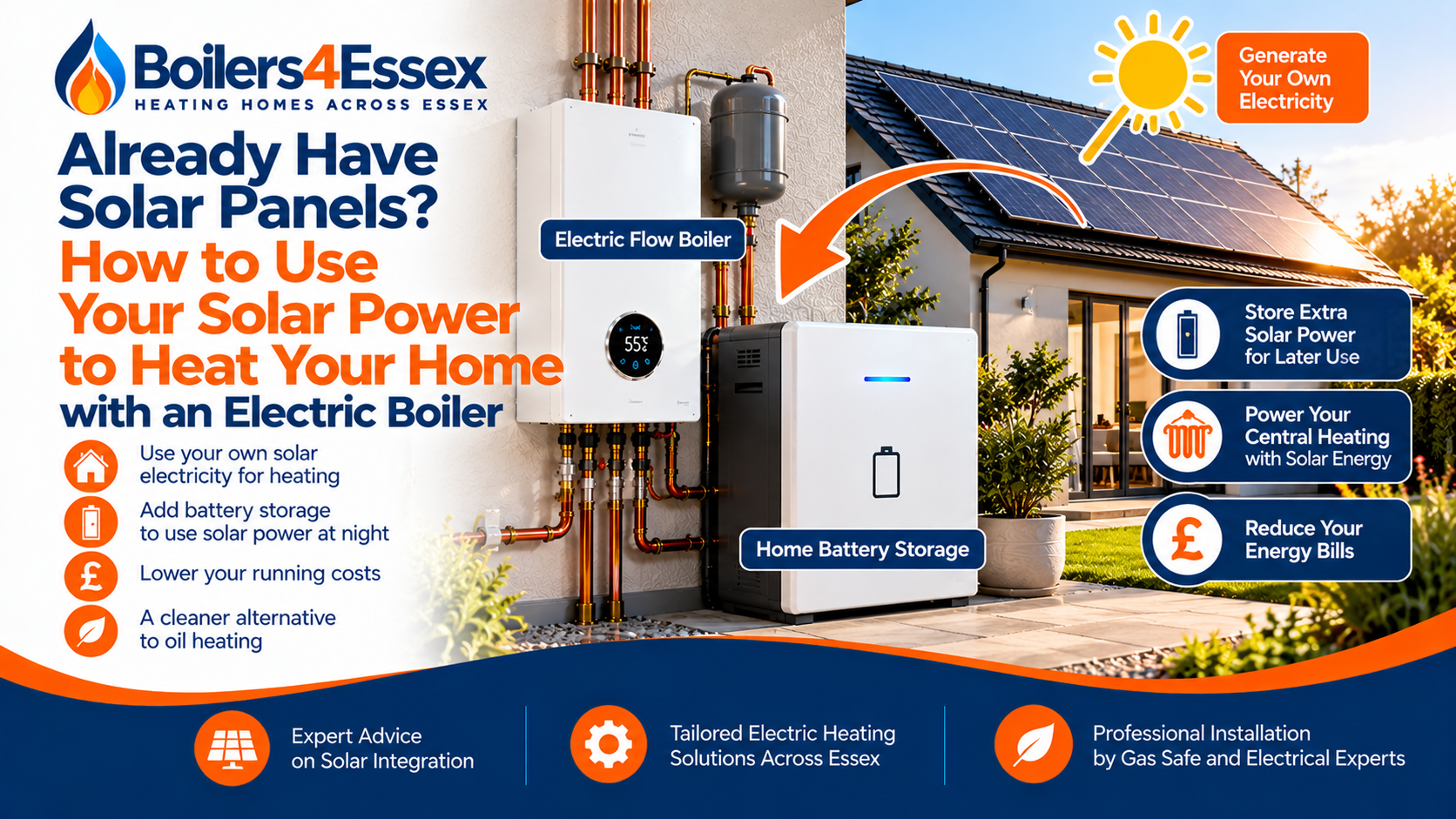
Quick answer: Solar panels can provide electricity for a home's electric central heating system, but their contribution depends on the weather, season and the property's demand. Battery storage can help make more of that generation available after sunset.
How do solar panels power electric heating?
Solar photovoltaic panels generate electrical energy, which is converted through an inverter for household use. When the electric flow boiler is operating during daylight, solar generation can help supply its electrical demand.
If the boiler requires more electricity than the panels are producing, additional power must come from the battery or grid. A 4 kW solar array, for example, cannot be assumed to supply a 12 kW electric boiler at full output.
Why use home battery storage?
Solar generation and heating demand often occur at different times. A compatible battery can store some surplus electricity for use later in the day or overnight.
The correct battery design must consider both kWh capacity and kW inverter output. For a system intended to cover the entire day's heating and household electricity requirements, the storage may need to be much larger than a conventional solar battery. Read our electric boiler and battery storage guide.
Can solar panels heat your home during winter?
Solar panels continue to work in winter, but shorter days and reduced sunlight generally limit their output. Because space-heating demand increases in cold weather, solar alone will often make a relatively small contribution to total winter heating electricity.
Overnight grid charging may therefore be an important part of the system. Find out more in our winter solar heating guide.
Should solar electricity be stored or exported?
It depends on the value of the electricity. Some households receive export payments for surplus solar generation. If export income is higher than the effective cost of later off-peak imports, exporting can be more economical than storing every available kWh.
Smart energy controls should consider actual import and export rates and battery efficiency.
What needs checking before installation?
- Solar panel system size and historical generation.
- Inverter compatibility with additional batteries.
- Existing export arrangements.
- Boiler output, hot-water needs and winter electricity use.
- Incoming electricity supply and battery charging capacity.
- Alternative heating technologies, including heat pumps.
Are solar panels and electric boilers right for an oil-heated home?
They may offer a useful way to reduce reliance on oil, especially where the property already has suitable solar equipment. However, whole-system running costs and installation costs must be calculated before making a savings claim.
For solar owners, read our dedicated guide to adding batteries and electric heating. Boilers 4 Essex can discuss the electric boiler aspect of a proposed heating replacement.
Frequently Asked Questions
Can solar panels power an electric flow boiler directly?
Yes, solar generation can contribute while the panels are producing electricity, subject to system capacity.
Will I need a battery to use solar for heating?
Not necessarily for daytime generation. A battery allows some electricity to be used later.
Can solar panels eliminate heating costs?
That should not be assumed, especially during winter when solar generation is generally lower.
Explore our electric boiler services in Essex, our oil boiler services, or contact Boilers 4 Essex.
Information note: Any figures are illustrative unless stated otherwise. Tariff availability, heating costs, equipment suitability, savings and 24-hour battery coverage depend on individual circumstances. No savings or full-day autonomy are guaranteed without a property-specific design and assessment.
