
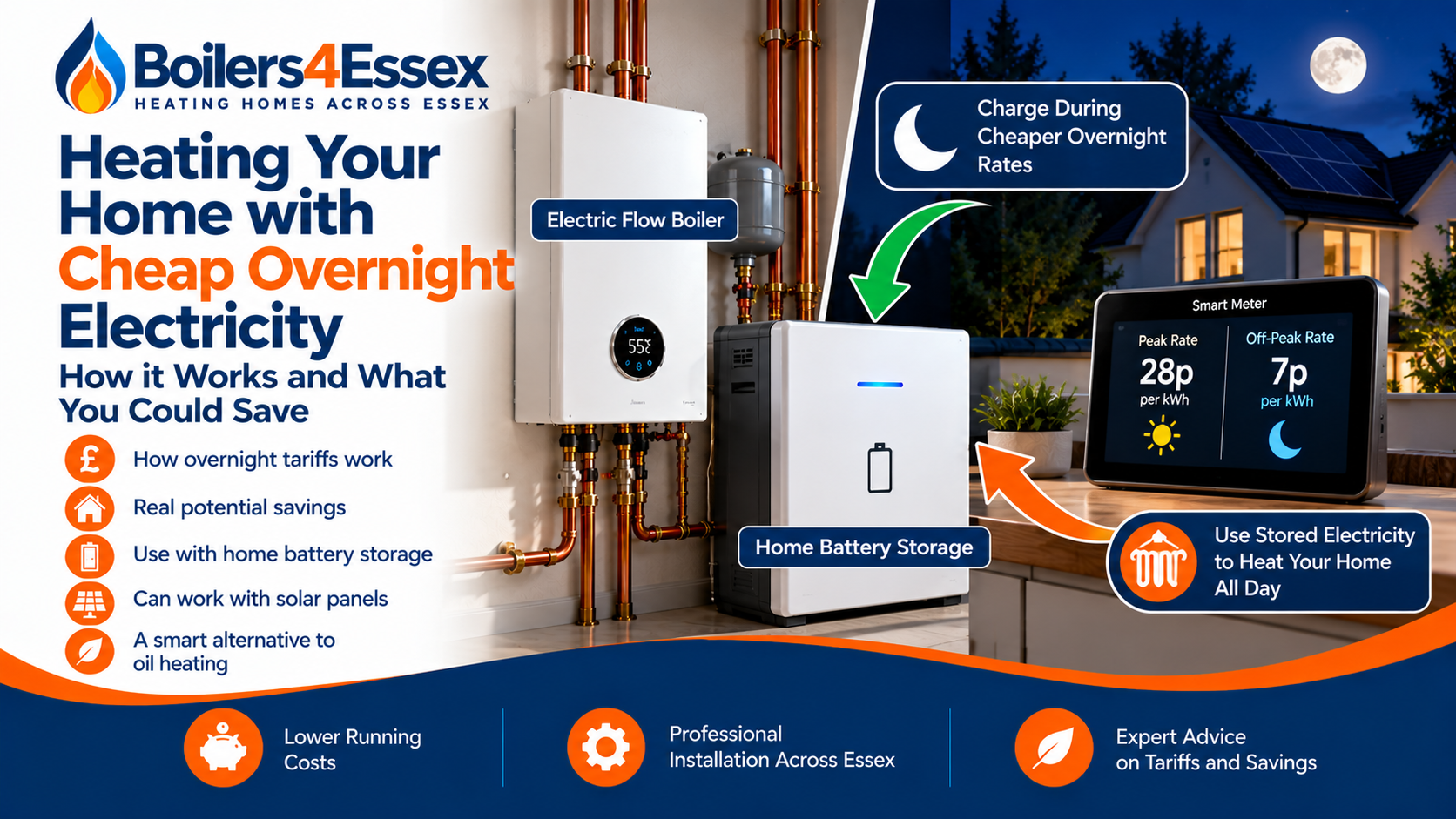
Quick answer: Smart electricity tariffs can charge different rates at different times. By combining an electric flow boiler with appropriate battery storage, homeowners may be able to buy a large proportion of their heating electricity during cheaper overnight hours and use it later.
What is an overnight electricity tariff?
Time-of-use tariffs charge different prices depending on when electricity is consumed. Economy 7 traditionally provides a lower-rate overnight period, while some newer tariffs offer distinct charging windows or rates linked to particular smart equipment.
The cheapest rates advertised may not be available to every household. Some have electric vehicle, compatible charger, meter or other eligibility requirements.
How can battery storage reduce daytime electricity purchases?
A suitable battery charges when electricity is cheaper and discharges to support the household when grid prices are higher. If the inverter is powerful enough, stored electricity can contribute to running an electric flow boiler.
This shifts the time electricity is purchased. It does not improve the electric boiler's basic efficiency, and energy is lost during battery charging and discharging.
Example of stored electricity costs
At a hypothetical 8p/kWh overnight rate and 90% battery round-trip efficiency, each kWh delivered from storage has an energy purchase cost of approximately 8.9p. At a hypothetical daytime rate of 26p/kWh, using stored electricity could substantially reduce the variable electricity cost.
That difference must still be compared with the capital cost and life of the battery. See our electric versus oil boiler running-cost comparison and our installation cost guide.
Can the battery always charge fully overnight?
Not necessarily. A large battery requires substantial charging power, particularly when the cheap period is short. If the battery needs 60 kWh of purchased electricity in six hours, the system needs an average 10 kW charging rate before adding other loads.
The import capacity of the property and the selected battery's charging limit may restrict what is possible. Learn about electrical supply requirements.
How does solar generation affect tariff decisions?
Solar PV can reduce purchased electricity during daylight and charge compatible batteries. However, when solar export payments are attractive, exporting electricity and charging at a cheap overnight rate may sometimes make more financial sense.
Smart controls can optimise decisions based on available tariff prices, likely solar generation, battery state of charge and heating demand. Read our guide for existing solar owners.
Will overnight tariffs remain cheap?
Rates, terms and eligibility can change. A financial model should test different electricity-price scenarios rather than assume today's cheapest rate continues indefinitely.
For any installation, Boilers 4 Essex recommends assessing the actual heating demand and the tariff available to the customer, rather than basing savings claims on a headline price alone.
Frequently Asked Questions
Can I charge a battery at night without solar panels?
Yes, compatible grid-connected home batteries can charge from the grid, subject to equipment and tariff conditions.
Can I get a cheap EV tariff without an electric vehicle?
Some tariffs require an eligible EV or charger. Eligibility must be checked with the supplier.
Does a low night rate guarantee cheaper heating?
No. Battery costs, losses, tariff terms, oil prices and alternatives must all be considered.
Explore our electric boiler services in Essex, our oil boiler services, or contact Boilers 4 Essex.
Information note: Any figures are illustrative unless stated otherwise. Tariff availability, heating costs, equipment suitability, savings and 24-hour battery coverage depend on individual circumstances. No savings or full-day autonomy are guaranteed without a property-specific design and assessment.
