
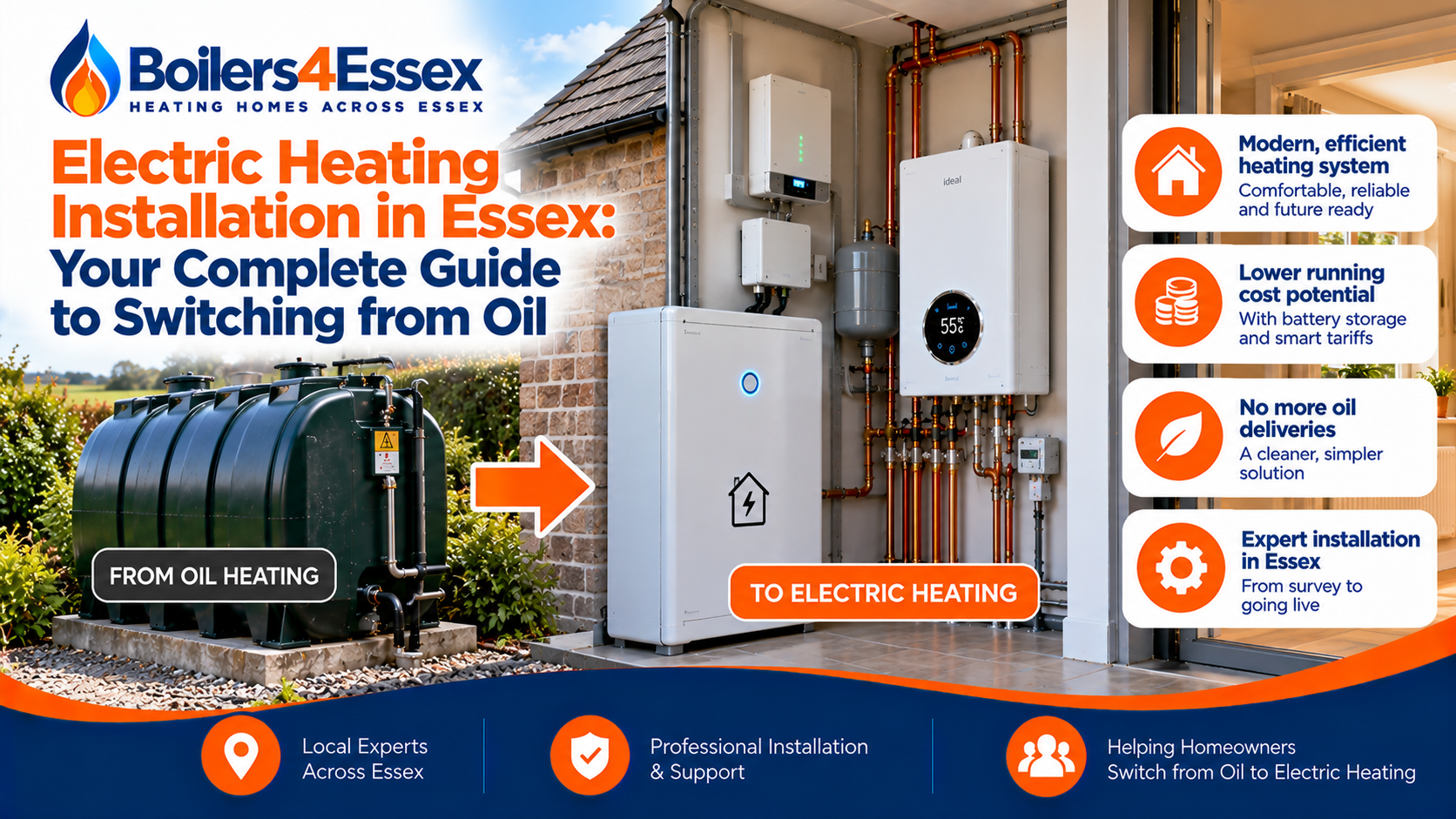
Quick answer: Replacing an oil boiler with electric heating can involve the boiler, hot-water system, battery storage, electrical supply, smart controls and possibly existing solar panels. A carefully planned installation begins with understanding the property's heating requirements rather than selecting equipment from a catalogue.
Step 1: Review your existing oil heating system
Gather information about the current boiler, radiators, hot-water cylinder and oil consumption. Annual oil deliveries help establish historic energy use, while boiler age and condition indicate whether replacement is already becoming necessary.
If you are concerned about fuel prices, read our guide to rising heating oil prices and alternatives.
Step 2: Carry out a heating assessment
A room-by-room heat-loss calculation helps determine how much heating the home requires. Insulation, glazing, air leakage, radiator sizes and heating controls should all be reviewed.
Reducing unnecessary heat loss can also reduce the electricity and battery capacity required by the replacement system.
Step 3: Select the most appropriate heating technology
An electric flow boiler is one option for a suitable wet central heating system. Other possibilities include an efficient new oil boiler or a heat pump.
The choice should reflect running costs, installation investment, hot-water requirements, electrical feasibility and expected equipment life. Read our electric boiler versus oil boiler versus heat pump comparison.
Step 4: Specify the battery storage
For the proposed overnight-electricity heating package, battery storage would be sized to meet the property's defined 24-hour heating and household electricity demand.
The design must cover usable stored energy, inverter output, charging losses, operating reserve, battery ageing and the chosen winter design conditions.
See our guide to sizing battery storage for 24-hour heating.
Step 5: Verify the overnight electricity tariff
The installation should not be designed around an advertised tariff rate without confirming that the property is eligible. Cheap-rate hours, daytime electricity charges, meter compatibility and any equipment restrictions must be checked.
Read our guide to overnight electricity tariffs.
Step 6: Check electrical supply and connection requirements
An electric boiler and large battery charger can place substantial demands on the incoming electricity supply. Competent electrical professionals should assess maximum demand, wiring, protection and any necessary distribution network approvals or upgrades.
Find out more about electricity supply requirements.
Step 7: Integrate existing solar panels
If solar PV is already installed, the design should examine inverter compatibility, export arrangements, historical generation and battery charging behaviour.
Solar may reduce purchased electricity, although winter generation is generally lower than summer output. Read our guide for existing solar panel owners.
Step 8: Compare installation costs and lifetime value
A fully scoped quotation should include boiler and hot-water equipment, battery and inverter specification, electrical work, controls, commissioning and any agreed oil equipment removal.
Projected financial savings should disclose assumptions about heating demand, tariffs, storage losses, replacement costs and alternative systems. Explore the installation and payback considerations.
Why choose Boilers 4 Essex?
Boilers 4 Essex is an established local heating company providing electric boiler installation and replacement services across Essex, alongside a wider range of boiler and heating services.
Whether you're based in Chelmsford, Braintree, Brentwood, Colchester, Maldon or elsewhere in Essex, the first step is to understand your existing heating system and what a properly designed replacement would require.
Return to our complete oil heating alternatives guide to explore the connected series.
Frequently Asked Questions
Can I obtain a quotation before choosing the battery brand?
Yes. A preliminary assessment can establish the intended demand and feasibility before a final equipment specification.
Can existing radiators be reused?
Often, subject to a survey of the existing wet central heating system.
Are installation costs fixed?
No. Final costs depend on property demand, equipment selection and the scope of electrical and heating works.
Explore our electric boiler services in Essex, our oil boiler services, or contact Boilers 4 Essex.
Information note: Any figures are illustrative unless stated otherwise. Tariff availability, heating costs, equipment suitability, savings and 24-hour battery coverage depend on individual circumstances. No savings or full-day autonomy are guaranteed without a property-specific design and assessment.
